Friday, September 29, 2006

SideStep finds UK domain game a bit of a problem

UPDATES at the bottom

There has been a fair bit of talk recently about brand hijacking of pay-per-click advertising campaigns in the travel sector – but there also appears to be an equal amount of commercial mischief regarding domain names.

SideStep, the US meta search website, has been operating for around six years and has officially launched in the UK and Ireland this week.

Branding is clearly important for an operation in new region and no more so than that for the web address of a company.

The company has used the URL Sidestep.com, obviously, since Day One, but expansion into the UK using its name has been fraught with difficulties.
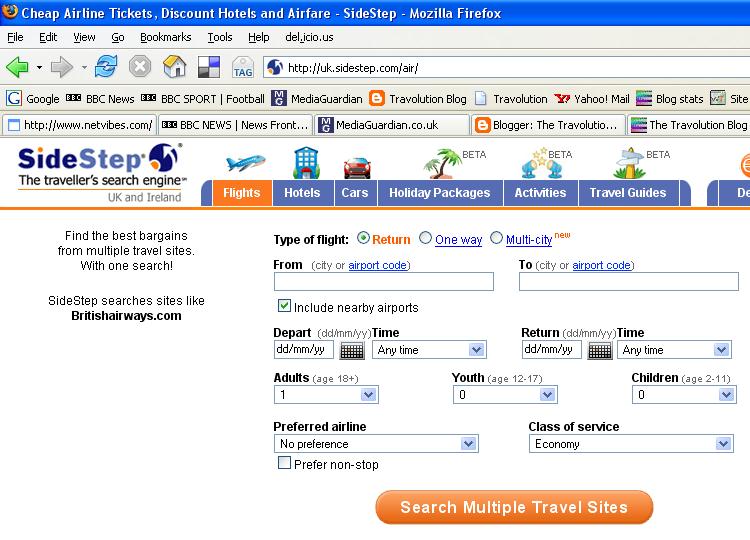
The California-based site has been trying to acquire the domain name Sidestep.co.uk for quite a while, but it is understood that the domain’s owner, Alan Ward-Collins, has been rather reluctant to sell.

This isn’t a huge problem in one respect, as users that type in Sidestep.com into a browser are automatically switched to the new Sidestep homepage for the UK & Ireland.

The problem arises when UK-based consumers, perhaps unsure of the correct URL, type in Sidestep.co.uk.

Rather than the usual practice of displaying a holding page, the domain's owner has been automatically throwing up the homepage of other websites.

Last week users looking for Sidestep.co.uk were apparently greeted with a UK football-related website.

But this week it came as a huge surprise to a number of people when users were actually re-directed to another leading meta search site, Travelsupermarket.com!!!
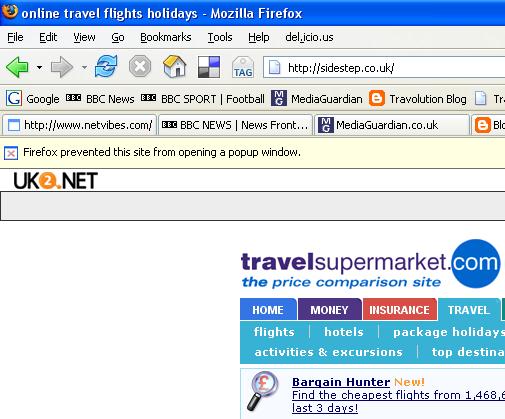
In some respects this is just a neat piece of commercial tomfoolery on the part of the owner: draw attention to the fact that domain names are available and then re-direct users to the site of a rival, perhaps raising the commercial profile in other words, the price of the URL.

Interestingly Travelsupermarket was completely in the dark that mistyping Sidestep fans or curious meta search searchers were being handily being given access to their own site. It would be fair to say they are not exactly unhappy with the situation!

Unlike SideStep, who say they are working to resolve the issue but appear to be quite frustrated…

UPDATE: UK2.net, which has its branding at the top of Sidestep.co.uk and currently hosts the site, has got in touch.

Ward-Collins last updated the registration in July 2006 and does not have to renew ownership until March 2008.

UK2.net does not control what is shown on the homepage but keeps its branding on the homepage in return for allowing Ward-Collins to have free reign over whatever site he chooses to re-direct to.

If Ward-Collins wants to get in touch, email here. We'd been fascinated to learn more about how something like this develops. What is in it, bar the obvious, for the owner? Is it quite a lucrative business?

Kevin May, editor, Travolution

Thursday, September 28, 2006

Aloft hotel built in 71 seconds

The Aloft virtual reality hotel is nearing completion and the Second Life team has produced a fantastic video of the hotel’s construction.

The YouTube video below, “shot” from a perch high above the site, charts its growth in little over a few months.


Visit the Aloft blog to see more of the latest developments.

Kevin May, editor, Travolution

Histories and explanations

Just one of the many pleasing aspects of our jaunt to Brussels this week for the PhoCusWright conference was the reaction we received to our September edition.

So thanks to you all for the kind words.

We’ve created a landing page on the website for users to browse through the years in our timeline piece, covering the history of online travel from 1996 to 2005.

Our spies also tell us that quite a few people were flicking through the 101 Explanations piece - our massive glossary of online terms - during some of the more techy presentations at the conference.

Which is nice……

Kevin May, editor, Travolution

PhoCusWright round-up

Here is a summary of all our posts at the PhoCusWright conference in Brussels on 26 and 27 September.

Thanks to Tricia Holly Davis for her contributions

Kevin May, editor, Travolution

Other live blogging events:

Travolution@ITT Oman
Travolution@NBTA Chicago

Wednesday, September 27, 2006

Travolution@PhoCusWright Brussels - Dark side of meta search

A recent Economist article, "The Dark Side of Debt", explored the long-term dangers attached to the current wave of private lending, which is helping to prop up a number of companies which, under conventional financial practices, may not float.

It is thanks to this glut of private funding that start-up meta search companies are springing up around the globe (Fare.net boss Pascal Bordat raised €8 million to fund his meta search company).

This glut of capital is apparently not working its way into the pockets of entrepreneurs aiming to launch a new OTA to compete with the likes of Expedia and Opodo.

How long investors’ faith in the so-called next generation of web search companies will last is anyone’s guess, but let’s not forget the MO of most PEs is to sell, sell, sell, so the real question might me which one of the new meta search entrants will be plucked by the established online players?

Tricia Holly Davis, freelance journalist

Travolution@PhoCusWright Brussels - India's Big Brother

Those British delegates who passionately disapprove of the UK government’s proposal to issue state ID cards could sympathise with Indian consumers, who apparently are reluctant to buy online because they don’t want the tax man to know how much money they have.

Such was the message from a panel of Asian entrepreneurs, who explained would-be Indian travellers do not want to use their credit cards for fear that big brother is watching.

Delegates were also quite surprised to learn that only an estimated 18 million people, out of a population of 1 billion, hold a credit card, and of the 40 million people who have access to the internet, a significant portion do not have high-speed lines.

Suffice it to say that those who had been feeling a bit antsy about not having already staked their claim in India now feel they have a bit more lead time. As one delegate put it: “I think we can afford to wait a little while”.

Tricia Holly Davis, freelance journalist

Travolution@PhoCusWright Brussels - Stupid budgets

[Brutally honest] quote of the day so far comes from Google’s head of travel in Europe and a member of Travolution’s executive advisory board, Esteban Walther.

“If people want to pay a high price for a click they are either stupid or have a very set marketing strategy!”

Walther also raises an interesting point that hits right at the heart of the online advertising debate.

People are using the internet for around 20% of their overall media consumption time, but online advertising accounts for a fraction of media spend.

One answer to this, put forward to us during an interview for a profile in the October edition of Travolution, suggests advertising budgets are still being ring-fenced and often operate under different marketing bosses. One for online; one for offline; often set up to 18 months in advance, with little chance of movement between the two to react to market forces.

Kevin May, editor, Travolution

Travolution@PhoCusWright Brussels - Who are you kidding?

All the hype over direct distribution was somewhat deflated during the first day of the PhoCusWright conference, as leading hoteliers admitted they don’t really know the true cost of pushing inventory through direct channels.

Earlier in the day, TravelCLICK had estimated the cost of direct distribution to be about one-third of the average GDS fee (including representatives’ fees) and a quarter of the price of OTAs.

But hotel delegates pointed out that the direct distribution costs, which TravelCLICK had estimated to be about USD$7.50, does not include the cost of building and maintaining a supplier’s own site, or the cost of paying a third party for top placement (eg Google, which some suppliers say can cost around €5, depending on the search term).

“We don’t know what the direct cost of distribution is, because we need to take into account so many different factors, such as marketing costs and incentives,” Kristie Goshow, group director, e-business development of Jumeirah told attendees during an afternoon panel.

“Let’s not kid ourselves, direct is not necessarily the cheapest option, [at least not initially].”

Tricia Holly Davis, freelance journalist

Travolution@PhoCusWright Brussels - Honest Hoberman

Brent Hoberman appeared to be in reflective mood at the last session of the day yesterday.

The nostalgia in the air was assisted by PhoCusWright boss Philip Wolf, who almost sighed when he suggested to Hoberman that it would probably be the last time they would have a one-to-one discussion on a conference stage.

“I liked making mistakes!” Hoberman admitted to Philip Wolf during a one-on-one discussion titled New Role for Lastminute.com Co-Founder.

In fact, Hoberman suggested if a company boss doesn’t make a handful mistakes each year they haven’t come up with enough ideas!

Honest stuff from a man who was selected as one of Travolution’s most influential people of the last ten years.

When pushed to reveal some of Lastminute.com’s biggest “mistakes”, Hoberman said Lastminuteliving.com should actually have been launched as a wiki-style product.

He also admitted that the first incarnation of Lastminute.com didn’t actually work very well and they should have spent more resources on it. The first site, in fact, cost only £300,000 and four months of work to create.

Kevin May, editor, Travolution

Travolution@PhoCusWright Brussels - Thumbs up

PhoCusWright attendees could be forgiven for not returning polite “nice to meet you” e-mails for a few days since they will likely be thumbed out from typing away furiously on their Crackberries, mobiles and laptops, blasting instant messages to their fellow conference attendees to further stir debate.

PhoCusWright planners deserve kudos for their innovative approach to delegate participation.

Though some may prefer the old 'raise your hand' approach, it must be said that it is refreshing to see a self-professed technology company actually practicing what it preaches, though next time they may want to keep some ice on hand to help soothe some of the overused digits.

Ouch.

Tricia Holly Davis, freelance journalist

Tuesday, September 26, 2006

Travolution@PhoCusWright Brussels - Hotels unsure over user reviews

A session focussing on the luxury hotel market...

PhoCusWright’s John Bray asks how enthusiastic the panel – Kristie Goshow (Jumeirah), Marcus Bernhardt (Steigenberger), Giorgio Boscolo (Boscolo) and Klimis Messios (Golden Tulip) – would be to include user-generated content on their websites.

Unsurprisingly the panel is keen to include user reviews - but equally lacking a shock factor is a general agreement that all comments will be moderated to ensure “malicious” activity isn’t shared with consumers.

Or is that bad reviews?

Goshow also admits being “overwhelmed by new search options” – perhaps she is still reeling from the previous speech from Yahoo! Travel’s Tim Frankcom, who revealed a myriad of marketing options available to advertisers across its various channels.

Interestingly Goshow, during her presentation, suggests Priceline “could have been ahead of the game when they said name your own price”.

It appears the middle classes are now trading upwards to luxury hotels, while high end consumers are now looking for bargains. In other words: they are pitching in with rates of their own, perhaps casting doubt over marketing strategies.

Kevin May, editor, Travolution

Travolution@PhoCusWright Brussels - Where the puck is it all going?

Bob Offutt, senior technology analyst at PhoCusWright, has just used a 15-minute speech to bamboozle delegates perhaps recovering from a slumber after lunch.

He references a US ice hockey player who used to say: “Look where the puck is going.”

Alongside the usual suspects, like user-generated content – “it’s nothing new” – and contextual advertising, Offatt reveals some key areas where innovation is going to lead the industry into what PhoCusWright calls Travel 2.0.

Perhaps most interesting for large number of travel companies is where travel search is heading, or tackling the “large sea content our there”.

The meta search sites – which, in fact, feel like a bit of a dirty word round here today – are popular with almost a third of online users.

But the likes of Farecast and Farechase are around the corner, with amazingly clever uses of tools such as Flash and Ajax [see our Explanations 101 for definitions], while Del.icio.us is also expected to feature heavily as a search tool.

Finally Offatt turns his attention to mashups. The ex-Sabre executive has used a variety of APIs from various sources to create Bobstravel, a fictitious travel service provider that exists solely by using content from other sites.

He uses Yahoo! Trip Planner for guides, Michelin for restaurants, Flickr for photos, Dolphin Dynamics for flight search and Hotels.com’s IAN tool for hotels.

Mind-blowing…

And apparently there are on average 2.77 new mash-ups created every day.

Kevin May, editor, Travolution

Travolution@PhoCusWright Brussels - No risk, no fun

That's the message from Thies Rheinsberg, director of corporate development at TUI, when describing how the online travel agents are losing share to traditional tour operators such as Thomas Cook and, of course, Thomson.

Apparently Expedia is the one taking the risks as it is the only OTA, according to Hitwise data, that is still growing.

Kevin May, editor, Travolution

Travolution@PhoCusWright Brussels - Soskin and Loughlin on the march

Two travel publishers, but two very different people, take to the stage to debate the merits of travel deals.

Cheapflights chief executive David Soskin has battled with TravelZoo managing director for Europe, Chris Loughlin, many times and it appears that actually rather relish the duel.

The interesting part of all this is that they actually sing very much from the same song sheet: both are publishers of travel deals and both run newsletters programmes – both pretty successfully.

Cost per acquisition models attract the ire of both men. “Fundamentally misaligned,” says Loughlin. “If there was good tracking in place we would consider it more,” adds Soskin.

Loughlin, answering a question from the moderator, PhoCusWright chief executive Philip Wolf, who has a strong presence on the room as paces around continuously, also criticises the affiliate advertising model.

Large sums of marketing money have been spent on travel portals with noticeable results, Loughlin says (500,000 subscribers at the last count), but so-called blind deals across “thousands of sites” have yielded very little.

Strange, then, that affiliate deals are apparently going to help secure 20% of sales this year…

UPDATE: Apparently Sidestep is unhappy at Loughlin's reference to the company being a "meta search company".

Kevin May, editor, Travolution

Travolution@PhoCusWright Brussels - India is coming

Travolution arrives in time for a fascinating debate on online travel in the now booming Indian market.

Moderating the session is PhoCusWright’s Ram Badrinathan, who recently wrote a paper on the enormous growth forecasted for the next few years in the sub-continent.

Stand-out comments from the rest of the panel – made up of Ashwin Damera (Travelguru), Deep Kalra (Makemytrip.com) Dhruv Singh (Yatra) – include how the Indian market is unique in that both consumers and the online travel industry are evolving simultaneously.

This, the panel believes, is probably unique to most of the existing markets as online travel agencies, in particular, developed long before the mass market adopted the internet as a route to buying travel products.

Interestingly the line between outbound tourism and travel within India is “blurred”, primarily because Indian consumers select product based on what they can afford, rather than what they can do practically.

This trend will continue as more visa restrictions are lifted on Indian travellers in the coming years.

Quick stats:

* Around 20% of air travel is currently booked online in India.

* This only equates to around 30 to 40 million people, a slim share of the actual population.

* 70% of traffic is from users with high speed access

* Conversions for advertising is higher on Google.com than on Google.in.

Kevin May, editor, Travolution

An alternative intro

Doug Read, executive director at Metro Newspapers, who coordinated one of our exclusive State of the Nation surveys for the September edition of Travolution, wrote two comment pieces to run alongside the research.

The first we produced in the magazine and here. The second is below…

“First and foremost: congratulations to those who have forged the travel revolution in the last 10 years. Some amazing brands and services developed in record time.

“Meanwhile in the Metro offices… ‘I can’t f**king believe it, I can’t believe they are doing this to me’.

“About 9.20 this morning, my normally calm and thoughtful colleague who occupies the seat two to my right explodes.

“Oh god! Is it her boyfriend, parents, friends, pet, estate agent…Mentally I’m thinking of a list of usual suspects. ‘And now they want to charge me £5 for my damn luggage’.

“OK, relax, it’s only an online travel booking moment. But then across the office comes another shout: ‘Yer, and there’ll also charge you for using your card to book, I think that’s outrageous’.

“Ok we’ll park that conversation there because the language got worse and worse.

“And the really interesting bit about this little outburst?

“Only a week before there were squeals of delight emanating from the same desk when the same person discovered that the price of her particular flight had dropped £200 quid since the last time she checked the availability.

“In that little story lies the most interesting issue our research produced. We had thousands of answers to open ended questions regarding the best and worse things about using the web for booking travel arrangements.

“I just found myself pondering how the travel service on the web might develop in the future.

“By and large the customer is certain they are paying lower prices than before and to about the same degree they like the ease and freedom the web provides.

“However the run away leader in the negative column is the lack of human help, advice and interaction available when booking on-line.

“Which begs the question: with so many firms using low cost business delivery mechanisms that help to drive low cost travel options for the traveller, will the service that wins in the future be the one providing a little TLC? Just a thought...”

The world of the online travel agent is taking a bit of a battering this week. Surely someone can defend them…

Kevin May, editor, Travolution

Monday, September 25, 2006

Online travel agents criticised

Here’s a fine example of complaints many consumers have about booking travel over the internet.

Darren Cronian, the chap behind the excellent Travel Rants consumer travel blog, has produced a list of issues he has come across when dealing with online travel agents.

Chief culprits amongst the list are:

* Prices that don’t exist – advertised products that eventually have an inflated price once hidden charges are added when the payment page appears.

* Browser (un)friendly websites – problems with Firefox, other browsers and other usability issues.

* Phone referrals – trudging through a booking process only to be told to ring a call centre.

While it may seem a little unkind to shovel a pile of criticism at the feet of online travel agents, Cronian raises some good points.

Unfortunately he does shy away from naming and shaming any sites.

The inconsistency of online travel agent sites is in some respects borne out of how haphazardly the internet has itself developed.

Nobody, especially in travel, can lay claim to getting the user experience absolutely perfect, as our various Road Tests have testified.

* The Royal National Institute for the Blind looked at how sites catered for disabled users – there was not a good showing from the industry in general.

* Some of the pioneers of the last decade failed to inspire a usability expert from Netizen Digital

Our main story last Friday, regarding Internet Explorer 7 and usability issues for travel sites, also raises a whole host of problems.

There is clearly a lot of work to do…

Kevin May, editor, Travolution

Ten years of leadership

Gail Kenny from Gail Kenny Executive Search writes:

How important is leadership, in today’s online environment, and how has it changed compared to 10 years ago?

It could be argued that in today’s online businesses, with high levels of automation where the key resources are no longer human, and workforce numbers have diminished, that leadership is less important than ten years ago.

This, of course, is folly. Any business, however great its penetration online and its degree of automation, still requires good leadership. What I believe has changed is perhaps the type of leadership required. Motivation, communication, organisational skills and an ability to encourage team work all remain essential ingredients of a good leader.

However, more so than ever before it is the ability to create a compelling vision which is the critical factor. This is because in the online world, there is so much information available, so much choice, so much diversity, that it takes a strong vision to galvanise everyone to work in the same direction striving for a common purpose.

The challenge is made all the greater by the pace of change and development. Everything is happening much more quickly, and certainly in warp-factor speed compared to 10 years ago.

Competitors are able to close the gaps and play catch up on sales and product initiatives that much faster. So it is the organisations with the leadership embodied in vision and innovation, the ones that are prepared to keep pushing the barriers that will win.

Another critically important aspect of leadership in many organisations recently has been integration skills. Look at the acquisitions and integration issues that Lastminute.com and Cendant have faced over the past few years.

It takes strong leadership and a compelling vision to drive through the integration at the pace that businesses necessitate.

There has also been a change in attitudes towards staff in the past ten years. Home working and flexible hours are common in most organisations today. Forward thinking businesses recognise the need to take a more flexible approach towards their employees and that in most cases they will be rewarded for such an approach.

How many people are logging-on in the evenings and at the weekends, Blackberry’s never leaving their sides? You are never far away from somewhere with internet access.

But again it is the compelling vision which remains so important when people are working remotely, where they are not in the office together with the rest of the team where it is so much easier gain inspiration and understand the common goal.

Gail Kenny, managing director, Gail Kenny Executive Search

Friday, September 22, 2006

Who was dot-conned in the end?

In the spirit of our celebration of Ten Years of Online Travel, here is a small reminder of how things were, according to some, in the bad old days of the internet.

The ad was produced by the Association of British Travel Agents in 2002.

Some argued at the time that it was a rearguard action by Abta in response to pressure from agents who could see their consumer base slipping away to the pesky upstarts in the online world.

The official line was that the ad was created to warn consumers about the dangers of un-bonded holidays.

You decide…

Kevin May, editor, Travolution

The Influential Ten - Revealed

So after weeks of voting, we can now reveal the results of The Influential Ten.

Simon Breakwell, Expedia

Sergey Brin and Larry Page, Google

Tony Cheng and Jim Donnelly, IgoUgo

Barry Diller, InterActive Corp/Expedia

Bill Gates, Microsoft

Mark Jones, Online Travel Company

Brent Hoberman and Martha Lane-Fox, Lastminute.com

Stelios Haji-Ioannou, EasyJet

Steve Kaufer and Langley Steinert, TripAdvisor

Michael O’Leary, Ryanair

Click here for full analysis of the list.

And who else was on the shortlist? Pierre Chappaz and Dominique Vidal (Kelkoo), Bob Deiner and Dave Litman (Hotels.com), Dinesh Dhajima (Ebookers), John Hatt (Cheapflights), David Filo and Jerry Yang (Yahoo!), Terry Jones (Travelocity), Andy Philips and Adrian Critchlow (Active Hotels), Simon Talling-Smith (BA.com), Jay Walker (Priceline), Alex Zoghlin (Orbitz).

Many thanks to all those that voted. And congratulations to those selected...

Let us know what you think on the comments page...

Kevin May, editor, Travolution

Thursday, September 21, 2006

Opodo is so cool

According to tonight’s TheLondonPaper [Thursday], Opodo has emerged victorious as the highest scoring travel company in the latest list of so-called CoolBrands.

In a list of the coolest internet brands, Opodo came ninth behind – surprise, surprise – Google, Ebay, Amazon, Skype, the bizarrely named Eatmyhandbagbitch.com, Yahoo!, Getty Images and Ocado.

In the overall list of the groovy and the trendy, luxury car manufacturer Aston Martin came top, followed by fashion designer Alexander McQueen, and the ubiquitous Ipod.

So, good news and a well done to Simon Vincent et al.

However, bad news for Lastminute.com, which has attempted to become the uber-trendy travel brand of recent years and, according to the CoolBrands panel and subsequent consumer vote, is lacking Opodo's secret touch.

So what is so cool about Opodo, rather than Lastminute.com, TripAdvisor, Mr and Mrs Smith, even Ebookers?

Kevin May, editor, Travolution

Travolution@PhoCusWright Brussels

Time for some live blogging again next week at the PhoCusWright conference in Brussels.

Following the success of both our coverage in June of the ITT Conference in Oman and Tricia Holly Davis’s trip to Chicago in July at the NBTA Convention, the Travolution Blog will be live on Tuesday 26 and Wednesday 27 September to follow events as they unfold.

Speakers during the two-day conference include Simon Vincent (Opodo), Dermot Halpin (Expedia), David Soskin (Cheapflights), Heather Hopkins (Hitwise), Tim Frankcom (Yahoo!) and Mike Nelson (Travelport).

Check back regularly for updates or take an RSS feed direct from the blog.

Travolution’s current favourite for aggregating RSS feeds is NetVibes – highly recommended

Kevin May, editor, Travolution

Wednesday, September 20, 2006

A night with Antor

To the glorious halls belonging to the Institute of Civil Engineers in London, where the Association of National Tourist Office Representatives was having a gathering last night.

This was Travolution’s first major foray into tourist board area of the industry, so much of the evening was an education for us to discover how important the internet is in their marketing strategies.

There will be more on this subject in the coming months, but it was interesting to see how much value the world’s tourist boards put on their online presence.

This ranged from almost nothing – except perhaps as an information portal – to user-generated content and meta search engines for flights and hotels.

The Antor chairman, Bärbel Kirchner, from the Dubai Tourist Office, admitted during her welcome address that the emergence of the internet has created massive new opportunities for tourist boards as they now have a significant channel to reach consumers.

It seems that while some are embracing the online opportunity, others are clearly lagging behind…

Light moment of the night came when a representative of the Egyptian office could hardly conceal his delight when he explained how he is now able to run internet ads for the land of the pyramids – after the government lifted restrictions on online marketing.

Previously the authorities would not accept an online ad as proof that an internet marketing campaign actually existed.

Kevin May, editor, Travolution

Tuesday, September 19, 2006

Sign up sign up

Some housekeeping. Just a few days to go until our landmark September edition of the magazine arrives in the snail-mail.

For those too excited to contain themselves, here’s a rundown of what's to come:

* Results of our Influential Ten poll to find the innovators of the past decade
* Three – yes, three – exclusive research projects
* Guest edited by Cheapflights chief executive David Soskin
* History of online travel

In the meantime, you can sign up for our regular e-news (sent every Tuesday and Friday) and also request a copy of our magazine.

Unfortunately most requests will probably arrive a little too late for the September edition and the next issue (October) will have to suffice, but if you ask nicely we may just send you a copy.

A full rundown here on the blog on Friday for the September edition.

Kevin May, editor, Travolution

Microsoft getting on its soapbox

Microsoft, unsurprisingly, has joined the bandwagon that is user-generated video-sharing today and begun beta testing its own service, known as Soapbox.

The service will be incorporated into the existing MSN Video after six months of allowing users to play around with the system.

Not sure about the bizarre dancing, erm, thing on the homepage.

Soapbox is clearly a rearguard action against the massive popularity achieved by the likes of Google Video and the ubiqutous YouTube in recent months.

At the last count YouTube was attracting 34 million unique users a month, a massive 22 million more than MSN Video.

So in the spirit of wanting to check out the new service, Travolution has tried to sign up today. Alas we were greeted with an unfortunate message.

We'll try another time...

Kevin May, editor, Travolution

Monday, September 18, 2006

Travellers need internet cafes

PING! Email newsletter arrives from trendy guidebook giant Lonely Planet with news on some research they’ve carried out with Mintel.

Apparently 95% of young travellers say a camera is the most important piece of technology on the road. No surprise there, of course.

A close second, however, is the internet café. So all-encompassing has the web become in the lives of travellers that they can’t do without it.

Interestingly the mobile phone (you never know when you’ll need one in the jungle) was further down the list, with over a third saying they did not feel it was an important item.

So what did travellers say is the most enjoyable part of travelling? Most said “exploring other cultures”, “interacting with locals” came high on the list, and the dreaded “finding myself” also featured strongly.

Kevin May, editor, Travolution

More from the Aloft in Second Life

The Aloft virtual hotel is looking very promising, with developers recently adding textures to hotel rooms and the lobby area.

The quality of the graphic rendering is absolutely fantastic.


Only a few weeks to go until the official “opening” of the hotel. Mine's a Pina Colada by the pool...

Kevin May, editor, Travolution

Friday, September 15, 2006

Naughty naughty

Those wags at Private Eye have turned their cruel wit on the beleaguered travel agent this week.

Oh dear.
Kevin May, editor, Travolution

Thursday, September 14, 2006

Guess the newspaper

Interesting conversation this afternoon with the travel product manager at the one of the UK leading quality - i.e. not tabloid - newspapers.

It turns out that travel - at the moment, he hastened to add - is not the most popular channel at the paper's website for consumers or advertisers.

Nor is it news, financial services, entertainment, food and drink, health or fashion.

Yep, sport manages to secure a third of all traffic to site.

Kevin May, editor, Travolution

YouTube on the up and up and up

If internet users hadn’t already realised…YouTube is now officially the fastest growing web brand in the UK, notching up a massive 478% increase in traffic in the first six months of 2006.

Internet research group Nielsen Net//Ratings said today that the video-sharing service had seen traffic soar since the beginning of the year to 3.6 million unique users in July.

YouTube’s growth has also surpassed that of MySpace during the first half of 2006, and will probably continue to climb, buoyed by the likes of Geriatric1927 – a British pensioner telling his life story – getting an enormous massive amount of press coverage in recent weeks.

Was it just us and a some heavily criticised people commenting on YouTube, but the Geriatric1927 thing was actually a bit dull, right?

The MySpace social networking site shouldn’t be downhearted - it still managed to achieve a growth figure of 98% in the first six months of 2006, with only photo-sharing service Flickr appearing between the two sites with a surge in popularity of 131%.

Other Web 2.0 sites, such as Bebo (up 85%) and Photobucket (up 91%), also featured in the top ten sites.

DIY fans are doing their bit as well, helping B&Q achieve growth of 72%.

Nielsen also managed to segment the results by sex. YouTube might be enormously popular but its traffic – around 65% - is made up mainly of men. MySpace is far closer to achieving equality of the sexes with a split of 53%-47% in favour of men.

Kevin May, editor, Travolution

Wednesday, September 13, 2006

A wee bit of praise

Travolution is in between a meeting of its executive advisory board and putting the September edition to bed this evening, so only time for a little self-congratulatory piece of back-slapping today.

An independent blog review site, Bloggeries, has cast its eye over the Travolution Blog and awarded us Four Stars and a nice write-up.

[That’s four out of five we hope - Ed]

The reviewers said: “The blog is very active as the content is updated nearly every day. I think the blog should be visited by not only those who are interested in travel industry but anyone who wants to pass time as you can find some really interesting news and articles.”

Very kind words, and many thanks.

NB: The latest edition of our magazine will be available from 22 September. And it’s a huge issue, all 104 pages dedicated to ten years of online travel.

Kevin May, editor, Travolution

Tuesday, September 12, 2006

Wifi to Edinburgh

Glossy one-page brochure arrived in the post today from UK train operator GNER, plugging its new hi-speed wi-fi internet connection for passengers.

The operator boasts how within a few weeks all 41 trains in its fleet – running between London, Leeds and Edinburgh – will be fitted with wireless technology.

The brochure even suggests some handy tips for passing the time, for those that aren’t spending their travelling hours still working [Surely some mistake – Ed?]

But what are the costs?

First class passengers will be delighted to learn that the service is free.

Standard class will be charged £4.95 for one hour or £7.95 for two hours.

A 24-hour tariff is available, obviously for passengers with return tickets rather than those stuck for hours, say, just outside Berwick following a power failure!

Price of a single first class ticket from London to Edinburgh tomorrow morning at 9am is £148. Price of a standard ticket on the same route at the same time is £111.

Is it worth the £37 upgrade for constant access, free tea and coffee, a comfy seat and complimentary nibbles?

Tricky one...

Kevin May, editor, Travolution

Self-service is the way forward

A Letter to the Editor:

The recent security threats at our airports brought into sharp focus the madness that ensues around holiday season up and down the country.

With the widespread availability of self-service check-in and check-in on-line, why is the greater British public still made to queue for hours adding to busy airports and compounding the security risk?

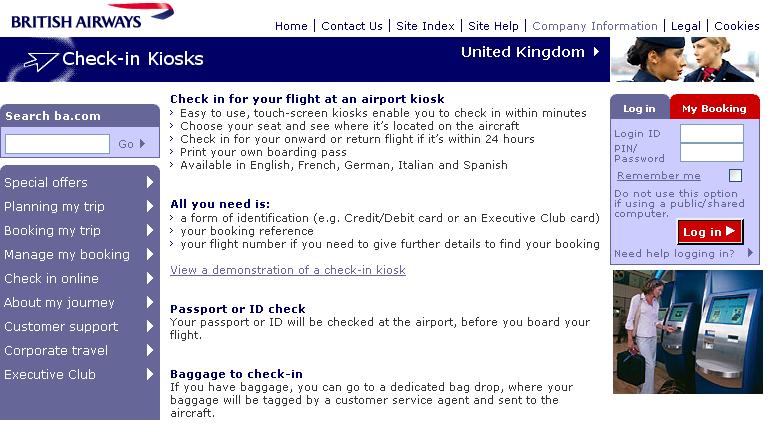
Self-service airline check-in, for example, costs up to a tenth of the traditional face to face model – prompting an increasing number of margin challenged airlines to encourage customers to adopt this approach.

Indeed, new US technology supports international check-ins, with terminals scanning passports prior to issuing boarding cards and luggage labels.

If the consumer – especially the queue loving British consumer – is to be encouraged to self-serve, organisations need to take a long term training stance towards encouraging adoption.

Organisations will need to invest in digital signage and dedicated queue busters to direct and encourage the consumer towards the kiosk – an approach that has underpinned the widespread US adoption levels.

It may go against the national grain but self-service is a global trend; failing to follow suit will fundamentally constrain competitive position.

Critically, in a highly competitive and difficult trading environment, the self-service model fundamentally changes the cost of sale.

It may be a difficult process to wean the UK public away from its addiction to queues but in pandering to this tradition, organisations are compromising their competitive position.

Queuing at our airports is no longer acceptable in the current security environment when we have the technology to avoid it.

Phil Hunter, event director, KioskComEurope

Monday, September 11, 2006

Virals and High Streets

A couple of intriguing press reports today on trends of the online world and the effect on consumers.

The Media Guardian today [needs registration] reports that the world of viral marketing may not be having the effect on consumers advertising wanted.

Travel companies have been urged in recent months to embrace the so-called Web 2.0 tools such as MySpace, YouTube in order to reach the next generation of consumers.

But research by viral marketing experts Kontraband suggests over half (53%) of consumers do not actually grasp the fact that they are on the receiving end of a commercial message.

Good or bad? Depends on what you're trying to sell, highlight or promote...

Not much chance of anonymity with campaigns on YouTube by Cheapflights in recent months, but Kontraband singled out recent efforts by Reebok and another by Virgin Money as being poor examples.

Meanwhile a front-page splash in today’s Metro reveals that the traditional High Street retailer is on the receiving end of a massive surge to online shopping, with an estimated 2,000 small shops closing each year.

Verdict Research claims total high street spending fell to £122.3 billion in 2005 as UK online consumers spent £8.2 billion, an average of £560 million per head and an increase of almost £130 in three years.

Kevin May, editor, Travolution

Friday, September 08, 2006

Content more important then ever

Toby Kesterton at LeadGenerators writes:

In some ways, this search engine optimisation game is getting easier.

Taking into account the advances in search engine algorithm technology, and ongoing research into semantic search engines, it seems as if the days when optimising a site for your human visitors is a completely different process to optimising the same site for search engines may well be coming to an end.

If, after all of the stylistic and layout work is completed, a search engine and a human visitor both rate websites according to the quality of the content, then we need to pay special attention to the copy on websites and in each of its pages.

For the time being, search engines are best served by selecting no more than three or four key phrases per page and incorporating them into your text, just as you should incorporate them into your title, headings, site tags and all the rest.

The question of how many pages you should write has also been discussed and resolved long ago. To recap, as long as the pages have different content on them, there should be no reason not to upload as many pages as possible.

So far, so conventional. The real question is who writes this content. To paint in broad strokes, there are two possible solutions to the question. Option one is to get your staff to write regular content for your site. Option two is to outsource your site’s content writing to one of the unique content provider companies that are springing up.

Both options have obvious advantages and disadvantages; if your staff are writing the content, then they will bring the assets of a thorough knowledge of the product, as well as being less costly than hiring an outside agency. Perhaps more importantly, you will hold the copyright on your text, and be able to tweak and amend it to improve its performance.

If you outsource your copy you gain time and expertise for functions such as dealing with customers. Your staff won’t be tied up writing the text for the site, and you’ll be putting your site in safe hands. The copy will be written much faster if you put a professional writer on the case, rather than adding it to the workload of your office staff.

On the downside, this will certainly be more expensive than keeping it in-house. More seriously, you may not retain the copyright on the text, meaning that if you find that the text is not optimised for the right keywords, or, more potentially damaging, if the content is not unique, you would not be able to amend the texts to improve your positions.

Which path you choose when writing your site copy depends to some extent on your site’s sector, size and ambition, and on the resources at your disposal. But in the new world of content driven SEO, if you want to be competitive in a competitive industry, then occasionally writing a page or two of content and updating your site every so often won’t cut it anymore.

Companies have realised that daily content updates that are relevant and interesting are not only necessary to achieve high ranking but deliver a good return on investment.

Toby Kesterton, head of search engine optimisation, LeadGenerators

Thursday, September 07, 2006

The Travelodge library

PING! Trawling through emails and the words “Hilton Dumped at Travelodges” scream out from a list of subject lines.

Is this a wisecracking PR from Travelodge mocking rival hotel giant Hilton?

Surely not. It is in fact the title of a press release plugging the results of a survey carried out by Travelodge to discover the top five books – all autobiographies, interestingly – left behind in its chain of hotels.

Just in case anyone is remotely interested:

1 – Paris Hilton (thus the, erm, clever title of the email)
2 – Jose Mourinho
3 – Jordan
4 – Jade Goody
5 – Sir Alex Ferguson

[NB: This is not a blatant attempt to improve the Travolution Blog's search rankings by targeting eager fans of the US socialite, Hilton.]

Kevin May, editor, Travolution

Oasis Hong Kong creates a buzz

Much gushing and speculation in the mainstream press today about Oasis Hong Kong Airlines, which unveiled its functioning website this week and details of services.

An article on the Magazine section of the BBC website explores whether the launch of OHK will spearhead a plethora of long-haul no-frills routes.

The opinion from the European Low Fares Airline Association, which counts the likes of Ryanair and EasyJet as members, suggests not – “the economies of scale” are not easily transferred to the long-haul model.

In other words: the methods used by a string of LCCs in Europe, such as quick turnarounds, for example, will not work on a carrier trying to look after passengers for eight-plus hours.

Every now and again someone will bring up the possibility of when the existing European LCCs will embark on plans to fly further than the self-imposed four-five hour limits.

Istanbul, Tallinn and Marrakech are indeed at the end of EasyJet and Ryanair’s current spheres of influence.

But why not, say, Cairo? New York? Moscow?

In the meantime, at first glance the OHK website appears to work well and has all the basic information for users. In fact, compared to other sites it is remarkably uncluttered.

[Update: the curse of Travolution must have kicked in as in the last hour or so the site has ground to a halt - Ed]

But if there is one thing OHK has got right so far it is its marketing strategy.

There has created a fair bit of coverage about its service and - shock, horror - is even attempting to reach out to the trade by allowing agents to register on its website to sell tickets – something a certain other no-frills airlines has studiously avoided doing.

Kevin May, editor, Travolution

Wednesday, September 06, 2006

Is the real mash-up the industry itself?

Tim Walters from Fatwire writes:

Just when you get used to the idea that mashup is not the first step in the preparation of a capirinha, Air Berlin announces plans to merge with DBA.

This reminds the mainstream business press that BA is likely to take over Iberia; Lufthansa has an elective affinity with Austrian; and Air France-KLM still obstinately refuses to become further hyphenated via the seemingly inevitable purchase of Alitalia.

Emirates, meanwhile, might acquire Austrian. Or British Airways. Or Britain.

[Are you sure? - Ed]

Not to be outdone by the avian few, the rest of the travel industry also has a bout of merger mania (or its flip side, a hankering for “strategic reorganisations” and break-ups).

In August, Royal Caribbean buys Spanish cruise and tour operator Pullmantur; MFS is sweeping the better part of the Australian/New Zealand retail market under its skirts; Travelodge is sold to Dubai investors; and KarstadtQuelle is about to buy Thomas Cook from Lufthansa, only to immediately flip Condor to an unnamed venture group. Kuoni calls off the marriage with First Choice, and banishes the over-eager bridegroom.

Seeking to eliminate redundant cost centres, Thomson/TUI will merge Hapagfly and HLX. (Haflxpag?)

Hilton buys Hilton from Hilton. Then there is (or is not) Cendant (Travelport).

In short, nothing like a revolution in product distribution to shake up an industry.

But: what does the future hold? What do your tea leaves or cappuccino foamed-milk stripes tell you about the upcoming mergers, acquisitions and renderings-asunder?

When and how do the UK’s “Big Four” tour operators become the “Big Three” – or less?

How will the GDSs diversify to counter the rise in direct distribution?

Bubble or not (see Kevin May’s recent posting), how will the online ecosystem (OTAs, consolidators, meta-searchers, etc.) evolve?

Who eats and who gets eaten? Or will Google just buy everything, Emirates included?

Tim Walters, director international marketing and strategy, FatWire Software

Tuesday, September 05, 2006

How to make a Google TV ad like BA

Never let it be said that the travel industry is lacking in imagination or enthusiasm to grapple with technology, or just have a fair crack at something new.

Within minutes of us posting a piece over the weekend about the new British Airways ad, featuring Google Earth, a friendly chap called Colin Maddocks from the Virtual Travelcast Blog left a comment with a bold claim that “creating something similar may not be that difficult”.

“I think I’ll have a go and see,” he wrote.

[Travolution admits to being mildly bemused by such an audacious declaration - Ed]

But no more than 24 hours or so later and Maddocks emailed us to let us know he had finished his masterpiece.

His “noble attempt”, he says modestly, was put together with Camtasia Studio and overlaid with text and images from his own company, Nilecruises4u.


It was a “bit of fun”, Maddocks writes.

There are trendy advertising agencies across London's Soho that would charge millions for that kind of creativity - and also spend months putting it together.

So well done!

Kevin May, editor, Travolution

Monday, September 04, 2006

Reasons not to hate the Brits

Travolution guest editor for the September edition, David Soskin, who runs Cheapflights when he’s not chasing news stories (only kidding), is clearly a fan of video-sharing service YouTube.

The US arm of the business, headed by vice-chairman Hugo Burge, recently produced a viral marketing campaign for a promotion on its US website, Cheapflights.com, extolling the virtues of the British.

Sticking to company principle of not spending money on offline media, Seven Reasons to Not Hate the British was distributed only on the web.


Enquiries are underway to determine the proud owner of the voice behind the ever-so-British narration.

Kevin May, editor, Travolution

I'm forever blowing - dot-com - bubbles

Some interesting titter-tatter on the web in recent weeks about the size of the online travel industry and whether there are too many start-ups.

The theme pretty much goes like this: there is a bubble growing and at some point it may well burst, splattering unfortunate travel companies everywhere.

Travolution’s head is full of ten years of online travel at the moment, but this just seems like a bit of a flashback to 2000.

Katie Fehrenbacher, writing on the technology blog, GigaOM, says: “Every week we get news of online travel companies raising money, adding social and community features, and trying to diversify their sites in a variety of ways. Online travel is a relatively low capital business, a lot of investors and startups figure: why not try it out!”

But she asks whether “geo-political turmoil”, citing the recent alleged terrorist plots in the UK, will have a potentially fatal impact on the growing bubble.

Most industry figures point to the continued and phenomenal rise of online travel as an indicator that there is plenty of room left for start-ups, new ideas – and, ultimately, growth.

Chris Lake from E-Consultancy adds a rather telling comment on Fehrenbacker’s post.

“You could have a million travel start-ups and it still wouldn’t be a bubble,” he writes. “A bubble isn’t driven by start-ups but by smart/idiot financiers in VC [venture capital] firms and investment banks.”

As he points out: the term "bubble", according to Wikipedia, is a concept often fuelled by speculation. "I think we all need to quit talking about the Second Tech Bubble," he adds.

So why are people talking about bubbles again?

Despite the growth - are there elements in the industry getting nervous once more?

Kevin May, editor, Travolution

Sunday, September 03, 2006

BA and Google Earth

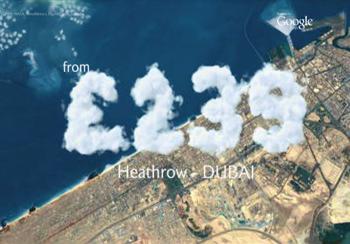
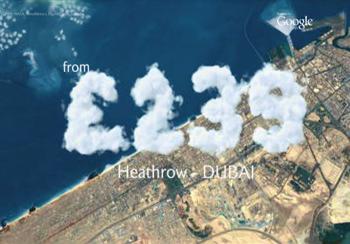
BA has struck a deal with Google Earth to use its satellite imagery during its latest TV advertising campaign.

The ad has had a wide airing this weekend and is expected to run for around a month, to coincide with BA's latest ticket sale.

[Full story here]

It's not on YouTube just yet, but here's a link to watch the ad in Real Player.

Kevin May, editor, Travolution

Friday, September 01, 2006

Lessons to be learned from Wikis

Rather humorous – for those interested in politics – developments in the Web 2.0 arena today following the recent launch of a environmental Wiki by the UK government.

It is relevant to the travel industry as a few senior figures have privately expressed an interest in developing some kind of wiki for their own websites, so consumers can create and edit content themselves and share with other users.

The wiki, launched by the Department for Environment, Food & Rural Affairs, has been developed to allow UK residents to discuss environmental issues in the UK, in the form of a wiki.

Of course it is nice if it works, but the problem with wikis is one of sabotage.

Perhaps sabotage is the wrong word: what governments and companies are terrified of are consumers adding their own views that may not entirely match up with either the corporate image or a particular policy.

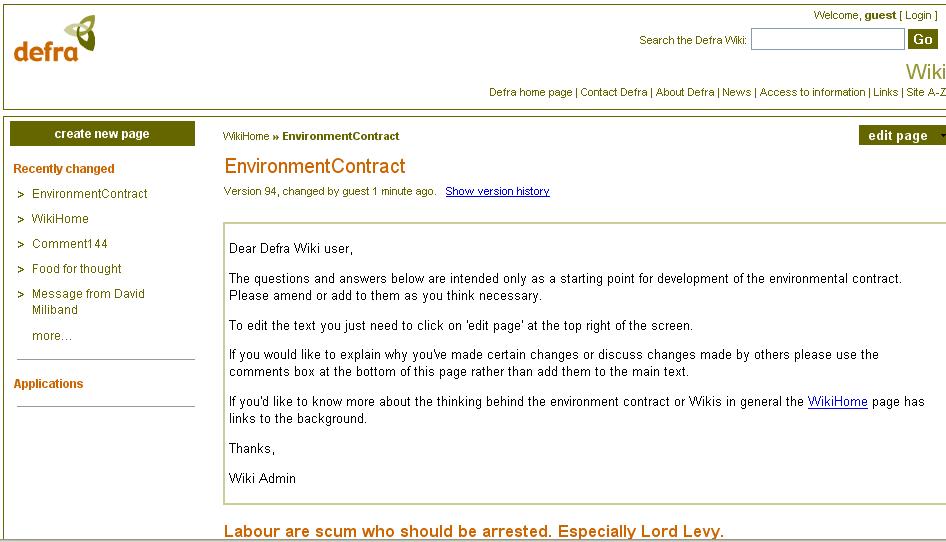
Within hours of a number of rather critical comments elsewhere on the internet, some enterprising users had already made their views known.

[Click on the image and note the, erm, message at the bottom of the page]

Whoops.

Needless to say, within minutes of it appearing, Defra webmasters removed it.

Let this be a lesson to travel companies toying with the idea of a wiki!

Kevin May, editor, Travolution

UPDATE:
Defra, unsurprisingly, has closed down the editing functionality. For a blow-by-blow account of how the day developed, as a deluge of insults against the government and the concept itself took over, visit the mischievous Guido Fawkes blog.

UPDATE II: Or here, to see how "vandalised" the wiki became before Defra pulled out all the comments.

Soskin and Cheapflights edit Travolution
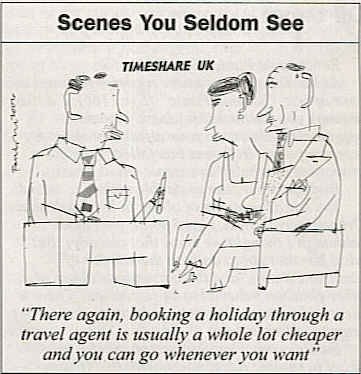
The September edition of Travolution is taking shape and will be available from September 22.

Recently our guest editor, Cheapflights chief executive David Soskin, has been getting involved and helping out with various parts of what we expect will be a landmark issue for us.

Soskin has been an enthusiastic supporter of our edition, and not just because Cheapflights itself is celebrating a decade in business!

Indeed most industry figures we have spoken to agree it is a good time to recognise the achievements of the online world in becoming a driving force for change in the travel sector.

[It was nice to see the Guardian getting in on the birthday celebrations last weekend when it unveiled its own list of sites that have changed the world]

Our three separate State of the Nation reports have now been completed by the Metro Newspaper, Lorien Research and readers of Travolution and Travel Weekly.

We will also be unveiling the results of another reader survey to find The Influential Ten – a list of the pioneers and innovators of the last ten years who have had the biggest impact on the industry.

As always with a poll the final list of ten luminaries is mildly controversial – there are a few names perhaps not immediately recognisable to everyone and there even some that various quarters of the industry would never have suggested.

In the meantime, ahead of the issue’s publication in three weeks time, we are looking for anecdotes from the last ten years from the rest of the industry.

We hope to re-reproduce as many of these as possible on the Blog and on a special section on the website.

Kevin May, editor, Travolution