Thursday, November 30, 2006

Where the hell is the 'Lution?

Our apologies to eager readers today for the total lack of content.

Travolution was flying back from the ABTA Convention to London Stansted during the day - we've also been incredibly busy this afternoon putting the final touches to our last magazine of 2006.

Some thoughts from the goings-on on the Costa del Sol to come...

Kevin May, editor, Travolution

Wednesday, November 29, 2006

Travolution@ABTA 2006 - Social media bursts out

Travolution has been busy here today, hosting a series of sessions that attempted - and suceeded, we felt - to summarise the world of Web 2.0 and its impact on travel.

It was actually rather interesting watching the reaction of not a majority, but a sizeable chunk of the delegates when listening to our trio of speakers - Travolution boss Simon Ferguson, Ed Whiting from Comtec and Dean Harvey from Spannerworks.

Many people, in part thanks to the recent Google deal and general mainstream media coverage, have now heard of YouTube.

MySpace registers somewhere on most radars, too - but throw names like Bebo, Technorati, Digg, Del.icio.us, or terms like mash-up, into the mix and some people start shifting in their seats a little.

It is crucial that travel companies - and there are many of them here - understand, despite the challenges of the brave new world, that there is actually a vast world of opportunity out there.

The travel industry is full of creative people. Channel that creativity into blogging, videos and social media tools and the world of Web 2.0 need not be something to be frightened of, but something to embrace.

Kevin May, editor, Travolution

Tuesday, November 28, 2006

Silvers splashing out

Research from the Royal Mail reveals there is much to look forward to once we all reach 55 – and also more opportunities for travel companies to target the Silver Surfers.

The Charmed Generation, as the organisation refers to the over-55s, take 37% more holidays a year than any other group.

In fact, they are the second fastest growing market for Round-the-World trips.

And, apparently, they spend around 14 hours a week surfing the web.

Kevin May, editor, Travolution

Travolution@ABTA 2006 - Sparks fly

Ahead of our flight to Malaga this afternoon, word reaches Travolution Towers of a turbulent first session at the ABTA convention this morning.

David Speakman, of Travel Counsellors fame, who famously ditched his ABTA membership last year, was invited back to sit on a panel, alongside Mark Tanzer and Justin Fleming of ABTA, Richard Evans of the Civil Aviation Authority and Paul Evans of Low Cost Travel Group.

Enter stage-left, Sarah Montague, of BBC Radio 4’s Today programme – a moderator who will clearly not tolerate any bad behaviour.

Speakman was, in the words of our spy, on “fine form”, laying into Fleming about the size of the ABTA board and questioning its use of members’ cash.

The feisty atmosphere continued, with Fleming hitting back – verbally, of course – and Montague continually trying to calm down the proceedings.

The discussion was also meant to address serious concerns over bonding, regulation, etc.

But it was “an hour of getting nowhere”, came the cry from one delegate. “Isn’t this where we were 16 years ago?” asked another.

It appears it’ll take more than a team building week to sort this lot out.

Kevin May, editor, Travolution

Monday, November 27, 2006

Alas more Borat

Clearly the world has gone a bit mad for all things Borat.

An email arrives - subject: The Real Kazakhstan - from a PR company in New York, following our post on the cheeky spoofster last week.

"Dear Kevin," it begins. "In case any of your readers are planning a trip to Kazakhstan as a result of the press the country has received lately, you might want to share [blatant plug for magazine here]'s current briefing with them on the country."

No thanks, but we'll pass on the message if anyone asks.

The email ends: "Contrary to the film's portrayal, it's a diverse and cosmopolitan country with a sizable Jewish population and no laws against homosexuality. For more information, you can direct them here [another plug via URL]. Let me know what you think. Thanks, [name of sender from trendy Madison Avenue PR firm here]"

Erm, we'll get back to you...

Kevin May, editor, Travolution

YouTube in - TV out

Another, if-proof-was-ever-needed, piece of research about the internet.

The BBC has today released a survey that reveals 43% of Britons who watch video on the web, at sites such as YouTube and Google Video, do so at the expense of traditional TV.

Of course the number of people that are regularly square eyeing themselves via their computer or laptop is just 9% of the total population, but the signs are there.

Travel HAS to seize upon this growing trend, for two reasons:

Grow your video content as quickly as possible - as consumers get used to watching video online they will more inclined to watch your own content.

Identify where consumers are watching video content and target them there.

A crude piece of analysis, but this paraphrasing what many in the industry are saying...

UPDATE: Excellent BBC section on Future of TV here

Kevin May, editor, Travolution

Travolution@ABTA 2006

Travolution is off again, this time to the Costa del Sol for the Association of British Travel Agents annual convention in Marbella.

Our time there will actually be quite limited - Tuesday night to Thursday morning - as we're also putting together the final touches for our December edition of the magazine.

On Wednesday morning we will be hosting three seminars, featuring Travolution favourites Ed Whiting (Comtec) and Dean Harvey (Spannerworks). Travolution boss Simon Ferguson will also be speaking about Travel 2.0.

Nevertheless, despite our short time on-site, expect some posts on the blog along the way.

Kevin May, editor, Travolution

Friday, November 24, 2006

Borat does his bit for travel

Kazakhstan spoof reporter Borat may be working tirelessly to - in a roundabout way - raise the profile of his adoptive country, but travel websites are also reaping the benefits of his tomfoolery.

Expedia-owned accommodation aggregator Hotels.com has apparently seen a 300% surge in searches for hotels in the much-maligned Asian country following the release of the recent Borat movie, starring comedian Sacha Baron Cohen.

For those uninitiated in the world of Kazakhstani hotels, there are actually a string of high profile properties in the country including the Hyatt Regency Almaty, Best Eastern Otrar, Premier Alatau Hotel, and the Best Eastern Ambassador Almaty.

So enthused by all things Borat, and clearly not wishing to miss a trick with consumers, Hotels.com is apparently going to expand its Kazakhstan portfolio.

Kevin May, editor, Travolution

Thursday, November 23, 2006

Star ratings are useless - apparently

PING! An email arrives from a company called Check Safety First, an online hotel auditing service, urging us to visit their stand at the ABTA convention next week in Marbella.

However, one of the headlines accompany the email is interesting and mildly controversial.

“Fact: No one believes that the star rating system is a guide to quality or safety………”

Really?

Kevin May, editor, Travolution

Final word on the Sunday Times-TripAdvisor story?

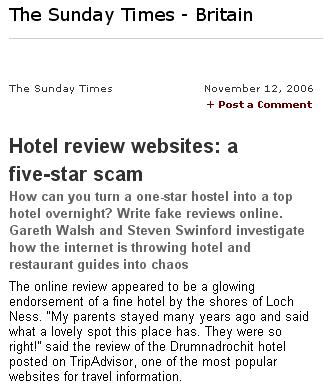
The recent Sunday Times exposé - A Five-Star Scam - on hoax reviews planted on websites such as TripAdvisor has certainly ruffled a few feathers in the industry.

TripAdvisor Europe managing director Marc Charron wrote a letter to paper last week defending the company’s model and drawing the attention of readers to the fact that his UK team had supplied the Sunday Times with details of a hoaxer the site had recently rumbled.

In the spirit of fair and balanced coverage, the paper also printed a letter from a Lindy Dumsday in support of the article.

However, Charron’s missive was backed by another from a certain Adrian Currie, managing director of Active Hotels, which was also named and shamed as a site of which consumers should be wary.

[Read the letters]

Don’t expect this to be end of the debate...

Kevin May, editor, Travolution

Wednesday, November 22, 2006

Handy tool or irritating pop-up?

UPDATE: Removed the Snap.com tool on 2 December 2006 - overwhelmingly negative responses.

Some of you may have noticed that we've been playing around with a new tool on the blog in the past few days.

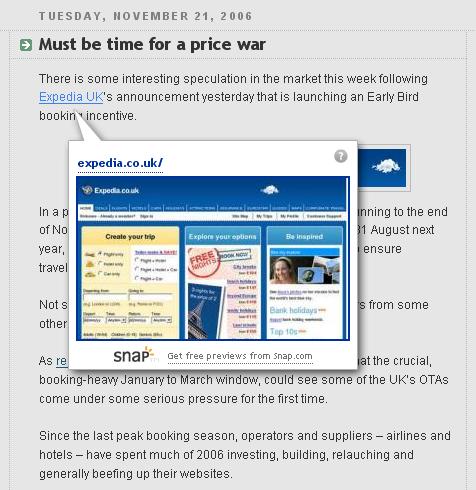
Pass your mouse over any link on the blog and you will be greeted with a small screen shot of the website relating to the particular URL.

The tool comes courtesy of Snap.com and is very easy to install. Simply post a few lines of HTML code into the template of a website or blog. [The code is available from the Snap.com site]

We're actually a little undecided here, so let us know what you think...

Kevin May, editor, Travolution

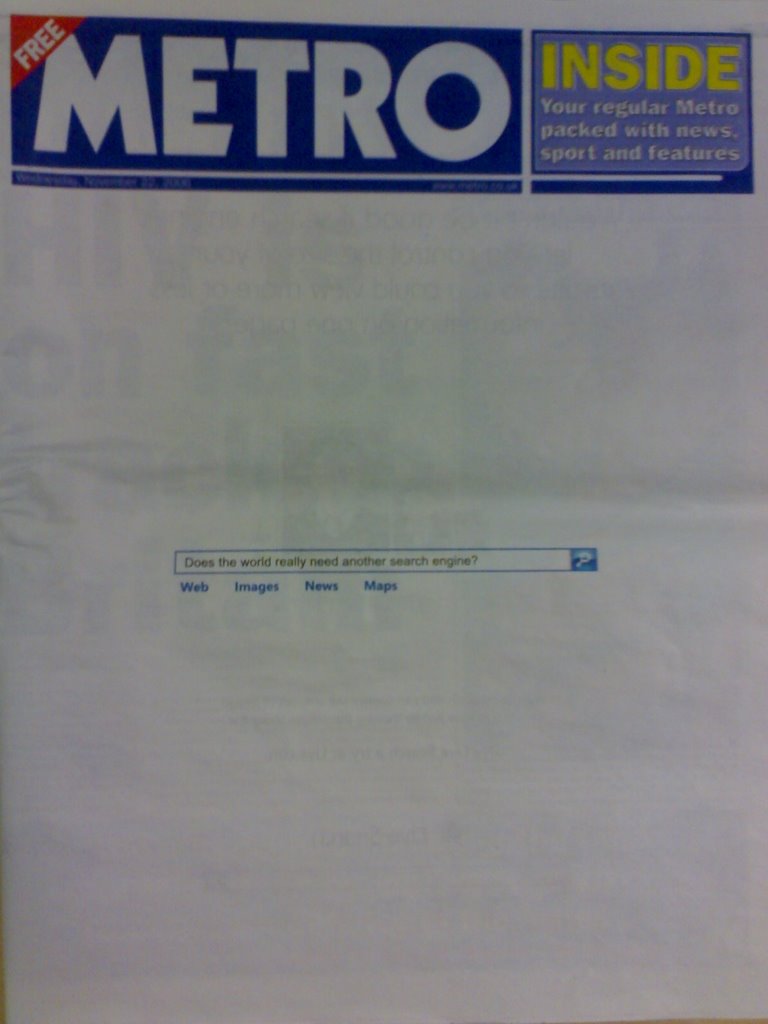
Does the world really need another search engine?

Microsoft clearly thinks so, judging by its efforts today in the UK, where it has taken out a – not cheap by any means – four-page cover-wrap of the Metro newspaper.

The practically blank page on “page one” of the newspaper says asks the question: “Does the world really need another search engine?”

The marketing push for the Live.com engine has now started in earnest, ahead of what is expected to be a pivotal year in 2007 for Microsoft with the launch of the Vista operating system, the upgraded Office suite.

And how much emphasis is Microsoft putting on the Web 2.0 functionality of its product?

Just read the “back page” of the ad campaign in the Metro: “Wouldn’t it be good if search engines gave you more than just a flat overhead view to go with your maps and directions?”

Interesting times in the world of search…

Kevin May, editor, Travolution

Tuesday, November 21, 2006

Must be time for a price war

There is some interesting speculation in the market this week following Expedia UK’s announcement yesterday that is launching an Early Bird booking incentive.

In a press release yesterday Expedia said its promotion, running to the end of November and for trips booked between 1 January and 31 August next year, would be going head-to-head with low cost carriers to ensure travellers “get the best deals and better availability”.

Not so sure about that, appears to summarise the whispers from some other online travel agencies and other industry watchers.

As reported today on the website, speculation is building that the crucial, booking-heavy January to March window, could see some of the UK’s OTAs come under some serious pressure for the first time.

Since the last peak booking season, operators and suppliers – airlines and hotels – have spent much of 2006 investing, building, relauching and generally beefing up their websites.

Clearly many of them now feel they can target consumers with above-the-line advertising campaigns that urge consumers to visit their website.

There are also millions of marketing pounds being spent on pay-per-click advertising. In short: suppliers and operators want consumers to book a product in the most direct way possible, with them – i.e. through them.

So if suppliers and operators are to see a major uplift in the amount of direct bookings, consumers will be coming from somewhere, even taking into account the steady increase in general online travel activity.

In some respects Expedia is going up against the likes of EasyJet and Ryanair, but if senior figures in the industry are to be believed then they – and perhaps other OTAs – could actually be taking a wider view of how business will play out early next year.

Or perhaps not. Send us your comments...

Kevin May, editor, Travolution

Mash-up collections

The “mash-up” count at the recent Travolution@WTM conference must have run into the dozens – such is its growing popularity as a key tenet of Web and Travel 2.0.

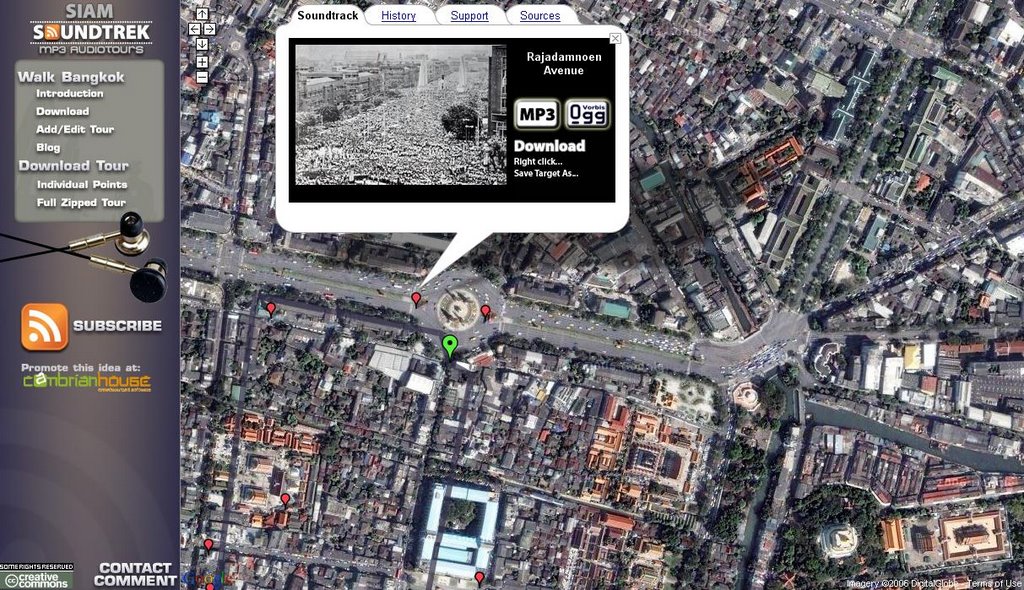
Therefore for fans of the concept, Programmableweb.com has created a list of some of the best travel mash-ups on the web.

Our favourites include:

And for the macabre amongst you:

Crashmap.us [details road fatalities in the US!]

Kevin May, editor, Travolution

Get Travolution news on the blog

You can now get up-to-the-minute news from the Travolution website here on the blog.

The top five stories are featured in the navigation bar on the right-hand side.

Kevin May, editor, Travolution

Monday, November 20, 2006

Lastminute does nicely in The Observer

Admit it: you thought Lastminute.com was just a travel site, right?

But as the gang on Victoria Street say as often as possible, Lastminute.com does a fair bit outside of travel.

So therefore they couldn’t have asked for much more of a lift when The Observer did a nice bit of PR for them at the weekend.

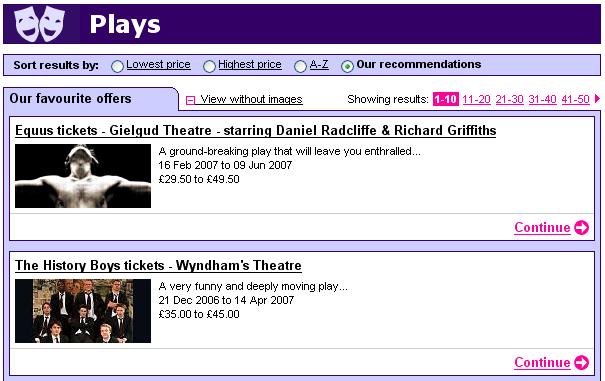
Lastminute.com went up against well known ticketing sites Ticketmaster.co.uk, Ticketweb.co.uk, Theatretickets.co.uk and the recently launched John Lewis effort, Greenbee.com.

Luckily for Lastminute.com it came second behind TicketMaster, scoring eight out of ten, according to event promoting supremo Harvey Goldsmith.

[TicketMaster received an all-conquering nine; Greenbee grabbed six; Theatre Tickets managed five; and Ticket Web was slammed – “crap” – with a woeful two]

Kevin May, editor, Travolution

Who is the Sauron of Second Life?

Just to confirm that Travolution had nothing to with the attack on Second Life over the weekend by a mystery worm, known as Grey Goo! [Us amateurs are often accused of all sorts in SL!]

Seriously: the attack apparently came in the form of spinning gold rings planted in various around Linden, which sent the system into a spin when residents tried to interact with them.

The Lord of the Rings - pun most defintely intended - has yet to be identified.

Friday, November 17, 2006

Weekend Caption Competititon # 5

So here's Carol Dray, ex-Thomas Cooker and once of the Lastminute.com parish, and this week installed at Travelzest, with a mystery companion at last week's Travolution@WTM after-show cocktail party.

Entries via the comments button below, please...

Who gets their traffic from PPC?

Heather Hopkins from Hitwise has turned up some interesting data revealing how much traffic the top ten travel websites bring in from sponsored links in search engines.

The diagram below – from the week ending 21 October – indicates how much traffic the ten receive from search engines (horizontal) against how many of those same visits come in via pay-per-click ads.
The first site to stand out is price comparison offering Cheapflights, which brings in around 55% of its overall traffic via search engines, but only around a third is from PPC click-thrus.

The nearest any of the remaining nine sites gets to Cheapflights with its share of traffic from search engines is Airline Network, at around 45%.

Contrast Cheapflights with online travel agency Ebookers, which has admitted to serious problems with its search engine optimisation in recent months and is only bringing in around 30% of its overall traffic from Google, Yahoo! et al.

Ebookers’ share from PPC is around two-thirds of its overall search engine traffic.

Hopkins says: “The lesson for marketers is that there is no hard and fast rule for the right mix of paid and organic traffic. Instead, marketers should examine return on investment from specific campaigns whilst constantly testing and adjusting search campaigns.

[Read the full analysis here]

Kevin May, editor, Travolution

Thursday, November 16, 2006

Aloft Hotel virtual tour

The Second Life guys have put together the definitive tour of the recently completed Aloft hotel.


[See Travolution's first night in Second Life and the video of the hotel's construction]

Kevin May, editor, Travolution

Travolution@PhoCusWright Hollywood

Madeleine Wood from Spannerworks reports from the PhoCusWright conference in Hollywood, California:

Three days of “two dot ohhh”… So what’s the theory on the future of online travel from the other side of the Atlantic?

Prostitution is not the oldest human profession – travel writing is.

According to Lonely Planet chief executive, Judy Slatyer, we are compelled to share our travel experiences and learnings. Cave paintings show detail of where to get water, meat and shelter.

They even show evidence of rating systems, in the form of palm prints for useful content. Such communication is an inherent part of the human nature and has been for 20,000 years, making it -20,000.0.

Web 2.0 just means we have a fancier array of tools and gadgets through which to share our insights.

One third of those who use MySpace also use CNN.com, says a survey by Yahoo!-ComScore.

That’s not teenagers; it’s the general public of 35+. Social media isn’t just trendy or about planning for where future customers will be. In the UK and in the US, it’s where travel consumers are now.

According to director of interactive marketing for hotel chain Sheraton, Jeff Mirman, Web 2.0 wasn’t a seismic shift in their online strategy. Second Life, for example, which parent company Starwood used to showcase its new Aloft hotel, was simply about evolving their marketing in line with the new platforms people engage with.
[See Travolution's visit to the Aloft in Second Life]

So, Web 1.0 was about price led aggregation of content, Web 1.5 was Meta Search and Web 2.0 is about aggregation of content with product and relevancy. Users have moved beyond online travel as being about cost saving.

Web 2.0 is about fulfilling the function of the travel agent – inspiration, personalisation and trust.

The commercial benefit to social media is generating online loyalty, engagement and an emotional connection to inspire the purchase.

TripAdvisor, Travelocity and Starwood all say they generate significantly higher conversions to purchase following exposure to social media content.

So that's the business case we've all been looking for...

Madeleine Wood, business development manager at Spannerworks

Wednesday, November 15, 2006

New look and search box

Some of the more observant visitors to the Travolution Blog will have noticed we have had a wee re-design over the weekend.

Nothing too fancy. We are taking advantage of the Blogger upgrade, which includes a general freshening up of the pages and, most importantly [and about time too!], the use of tags for each post.

However we were shocked to learn that we have a disgruntled user - "Where has the Travolution Travel Search Engine gone, Mr May?", said an email this morning.

Our apologies. Our frighteningly well-received and handy tool has been restored to its rightful place, just over there in the right-hand navigation bar.

It was never our intention to keep it permanently, but for fear of a user mutiny we will keep it in place for the time being.

And our apologies to the disappointed user!

Kevin May, editor, Travolution

Stern Report and flight-eco searches

Heather Hopkins at Hitwise writes:

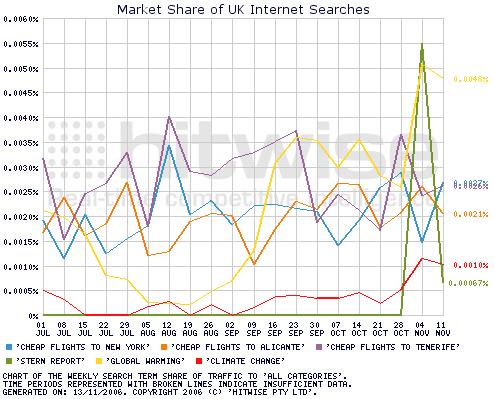
The release of the Stern Report two weeks ago, calling for eco-taxes and the curtailing of cheap flights, has caused a surge in online interest for global warming.

The share of UK internet searches for ‘global warming’ and ‘climate change’ each doubled the week the report was released (week to 4 November 2006).

Average session duration for the HM Treasury website increased 1 minute 24 seconds in the week the report was released to 5 minutes 12 seconds, indicating that consumers were reading at least parts of the 700-page report.

Will the Stern report dampen appetite for cheap flights? The following chart shows that searches for ‘stern report’ dropped back down last week, after a one-week spike. However, searches for ‘global warming’ remain high - ahead of searches for the most popular destination related searches that include the words ‘cheap flights’ - as illustrated in the chart below.

[I found these terms using the Hitwise Search Term Suggestion report to find all the top search queries that include the words ‘cheap flights’].

The young seem to be most concerned about global warming.

The share of UK internet visits to the HM Treasury website increased 3.5 times in the week to 4th November 2006 on the back of the Stern report and the percentage of visits from those aged 18-24 increased by 50% to 23.91%.

There is much talk in the news media about global warming and the level of chatter has been increasing.

According to Google UK News, there were 1,270 articles that mentioned "global warming" in from 29th October to 11th November, up from 518 for the two weeks before the Stern report. And, I should mention that Al Gore's powerful An Inconvenient Truth, was released before the Stern Report.

Concern seems to be growing about global warming and it will be important for the travel industry to watch whether this concern gains momentum in the lead up to the busy winter escape season.

One way to monitor this is to watch the share of internet searches for global warming and related causes.

Heather Hokins, vice president of research at Hitwise UK

Travel Weekly Globe Awards

If you've visited out sister title Travel Weekly's website in the last 24 hours you'll have seen that voting has opened for that most auspicious of events, the Travel Weekly Globe Awards.

That means you have until 28 November to nominate the standout suppliers in travel and tourism - if there's someone you think consistently goes beyond the call of duty, this is your chance to make sure they're recognised. Here's another chance to see who won last year.

As usual, voting also puts you in the running for some great prizes. Up for grabs, courtesy of Seligo, are a weekend in London for two; a weekend in Dublin for two; and four tickets to Alton Towers, Thorpe Park or Chessington World of Adventures.

Lastly, if you've forgotten what the awards ceremony is all about you'll find some visual reminders - some of which are perhaps best forgotten - at the Travel Weekly Globes 2006 Caught on Camera gallery. Enjoy, and get voting...

Vote here

Kevin May, editor, Travolution

Tuesday, November 14, 2006

New York Times and Expedia

An announcement today out of the US reveals, if proof was ever needed, that newspapers are indeed busily positioning themselves to make the most of the new opportunities associated with travel.

[See yesterday's TripAdvisor-Sunday Times post]

Online travel giant Expedia is to partner with the New York Times to power its online booking engine via the travel section of the NYTimes.com website.

Users, the press release says, will have access to Expedia's "latest technology and deep travel content, as well as the widest selection of vacation packages, flights, hotels, rental cars, cruises and in-destination activities, attractions and services".

Kevin May, editor, Travolution

More fall-out from TripAdvisor-Sunday Times

Interesting times following the apparent revelations in the Sunday Times at the weekend about abuse of user review websites, including TripAdvisor.

Last night a TripAdvisor spokesman, Ian Rumgay, appeared on the Chris Evans drivetime show on BBC Radio 2 to answer questions.

[Hear it here - fast forward exactly 1 hour and 30 minutes to find the piece]

TripAdvisor is somewhat unhappy that it actually sent the Sunday Times investigations' team the name of a hotelier in Scotland who had been caught out - highlighted in the first few paragraphs of the report - in order to demonstrate how the site polices its reviews, though this apparent free flow of information was not mentioned.

[
Read a report in the Scotsman - make sure you read the hilarious "giving Scotland a bad name" post in the comments section]

A quick chat with the Sunday Times this morning reveals a number of things:

* It believes TripAdvisor's processes to catch persistent hoax reviews does work - it is the single bogus reviews that are ones more difficult to catch.

* The team posted some, what can only be described as wildly inaccurate and often humorous reviews of hotels on Fodors.com, the US reviews site, which is completely unmoderated, to see how long it would take to remove them. Eg. A review of the European hotel was said to have a fantastic view of the pyramids. It took Fodors at least a few days to catch on, in some cases.

Kevin May, editor, Travolution

Monday, November 13, 2006

Sirens at TripAdvisor

"Firefighting" is the term used by PRs when a highly critical story breaks in the media and all hell breaks loose.

So it appears TripAdvisor is in the throes of trying to fix the damage created by a rather damning article in the Sunday Times yesterday (12 Nov) about online review websites, including the immensely popular TripAdvisor.

The piece [here] revealed how some hotels and restaurants are posting fake reviews to the likes of TripAdvisor, Activehotels and Toptable.

A follow-up piece is expected on BBC Radio 2 this evening, where a TripAdvisor representative will be mounting a firm defence of the site.

Ironically, the article in the Sunday Times comes amid a flurry of activity on the travel section of its own website in recent months.

As announced in September, the site now has contextual advertising and a dedicated search engine so users can look for travel products and explore its vast database of professionally written product reviews and destination pieces.

Indeed, from December users will also be able to post reviews and "share personal experiences".

Kevin May, editor, Travolution

New Opodo boss and marketing in the early days

It's been a few weeks now since Simon Vincent revealed he would be quitting as boss of the Amadeus-owned Opodo online travel agency for the world of direct selling with Hilton.

So, surely it must be time to speculate who might be in the frame for the job in the New Year.

A very well-informed source - i.e. a senior figure familiar with the process - told us this morning that the ideal person for the chief executive position would be someone from the marketing-consumer world, and not necessarily from within the travel industry.

Let the rumour-mill turn a little bit on that one.

In the meantime, demonstrating how important OTAs used to place - and still do? - on pay-per-click advertising, it turns out that Opodo spent somewhere between £300,000 and £400,000 in the first six months after its launch in 2001 in order to ensure it appeared in the Number One position for EVERY travel-related keyword.

Kevin May, editor, Travolution

Saturday, November 11, 2006

Travolution@WTM - Photographs and presentations

Pictures from the Travolution@WTM conference are available on Flickr [Credit: Newspics. Do not reproduce without permission]

Presentations are also available.

Friday, November 10, 2006

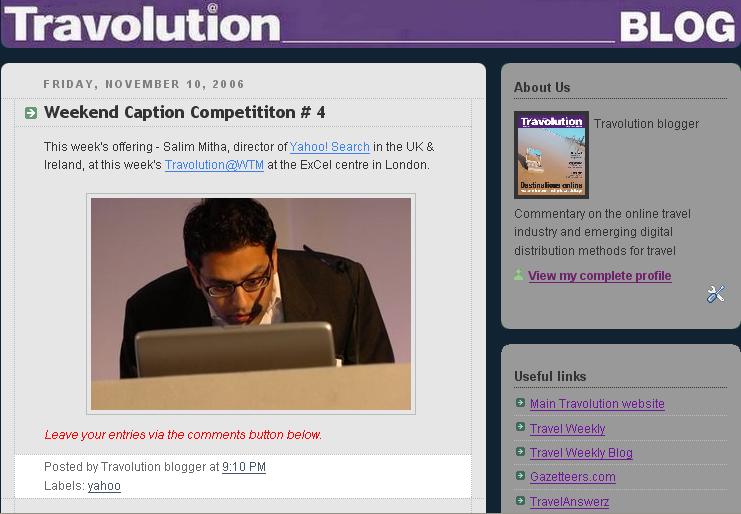
Weekend Caption Competititon # 4

This week's offering - Salim Mitha, director of Yahoo! Search in the UK & Ireland, at this week's Travolution@WTM at the ExCel centre in London.

Leave your entries via the comments button below.

Travolution@WTM - Round-up

See below for all the posts from Tricia Holly Davis, who blogged live from the Travolution conference at World Travel Market on the 7 and 8 November.

Photos available on Flickr [credit: Newspics. Do not reproduce without permission]

Thursday, November 09, 2006

Travolution@WTM-All Good Things Must Come to an End

Well bloggers, the Travolution conference at World Travel Market finally wrapped up yesterday, after two-days of star-studded performances by leading experts in the online travel world.

True, there wasn't any singing or dancing (well, at least not until we all got to the pub), but there were some heated debates about what the future will hold for online travel.

Nancy Lyndhurst, product manager for travel, O2, said website owners need to produce simplified, mobile-friendly sites if phones and PDAs are to take off as a method for booking travel.

Several panellists theorised about how long tailing will change the search process and price point.

Is cost-per-click dead? Maybe, maybe not, but site owners must be willing to pay to get their brand noticed.

"As soon as Google doesn’t find you slowly die," warned Adam Freeman, deputy commercial director, Guardian News & Media.

Not surprisingly, the final discussions of the conference turned to the importance of social networking and user generated content, and the impact these will have on the online space--a recurring theme throughout the two-day event.

"I’m incredibly jealous of TripAdvisor," Graham Donoghue of TUI, exclaimed during the closing session. "The more we trust the customer, the better off we'll be."

Freeman agreed, "You need to share your space with consumers and re-think control. As long as customers come back to you as a source of information, then you will be OK".

Delegates from Gail Kenny Executive Search, which hosted the closing soiree, asked panellists how they are dealing with the current talent shortage.

Most panellists said they were resorting to kidnapping.

No, they didn't really, but admitted that it's an issue.

Finding talented people will probably be more of an issue now that the Democrats have won back control of the American Congress and Donald Rumsfeld has at last resigned.

That is to say all the Silicon Valley wiz kids who have been hiding out in Britain for the past few years, can now safely return home.

Don't worry though, we'll be back for next year's conference.

Tricia Holly Davis
Freelance Journalist and American Refugee

Travolution@WTM-Furry Poledancing

The first thing I have to say about Michelle Peluso, the president and CEO of Travelocity, is that she makes me feel very, very, very lazy.

Now I'm not going to reveal Peluso's age, as that would lack taste, even in blog-land, but suffice it to say she is young and extremely bright.

So, hat's off.

Peluso also gets credit for flying to London to attend the Travolution conference at World Travel Market.

As most of you probably know, Peluso doesn't tend to make public appearances, so that she made the transatlantic trek for a 45-minute panel is a credit to her sense of what is happening in the European online market (and that she thinks Travolution is fab, which of course, it is).

Maybe it's the time Peluso spent in ol’ blimey when she was attending Oxford with former Lastminute.com CEO Brent Hoberman, but, for a yank, she has a great sense of irony and doesn't mind taking the p...

When asked how Travelocity, whose parent company is Dallas, Texas-based Sabre, will manage to keep the Hobermaness (that is to say the entrepreneurial spirit) of Lastminute alive, Peluso said, "We know not to screw with a good thing".

An entrepreneur herself (Peluso founded Site59, which was eventually snapped up by Travelocity), Peluso is also aware that there are certain things better left out of Sabre's view, namely the furry pole (as in dancing pole) in Lastminute's head office.

"Put it this way," said Peluso, "We don't hold meetings in the office with the furry pole when the guys from Dallas are in town".

Good thinking Michelle. I, for one, hope you come back to London soon.

In the meantime, I'll read history and law at Oxford, start a charity, run a marathon, and save the world.

Tricia Holly Davis
Freelance Journalist

Travolution@WTM-Jet-Powered Roller Skates

Leave it to a room full of technology geeks--sorry, I mean professionals--to get into an excited discussion about the next revolution of the web, dubbed Web 3.0, while most normal people still haven't heard of Web 2.0.

But that's exactly what happened during the closing session of the Travolution conference at World Travel Market.

Even Esteban Walther, head of travel Europe, Google, was amused by the question, which came from one of the delegates in the audience.

Walther said he hoped he'd be retired by the time Web 3.0 made its debut. Good on you Esteban!

Seriously though, it was a great question.

If you're going to get into a discussion about the future of technology, then the panel of tech experts attending the Travolution conference are the people to discuss it with.

On the off chance Walther doesn't retire by the time Web 3.0 hits our screens, he'll be working out new ways people can get online.

"Today we're thinking about how to interact with the customer so I think the next stage will be about how people will access the internet," said Walther.

Nick Jones of Yahoo agreed, "3.0 will be about the convergence of various different types of media.

"It doesn't mean we'll all be riding around on jet -powered roller skates, but the online landscape will look a lot different than it does today."

What? No jet-powered roller skates!

Damn. Am I the only one who is waiting around for life to look like it did on the Jetsons?

Tricia Holly Davis
Freelance Journalist

Wednesday, November 08, 2006

Travolution@WTM-Power to the People

A consistent theme carried throughout the two-day Travolution conference, which took place during World Travel Market , was the increasing power consumers will have over the online travel market.

Whether it was John Bray from PhoCusWright, who discussed the impact of the shift to a consumer-centric society, or Graham Donoghue from TUI Northern Europe, who said, "The more we trust the customer the more successful we will be," the message was clear: consumers are wresting control back from the grip of suppliers and suppliers had better get used to it.

Hugo Burge, vice chairman of Cheapflights, agreed, "Viral marketing and social networking are now incredibly important".

Donoghue said, "If we don’t embrace user-generated content we're stuffed".

This is great news for sites like TripAdvisor.

"Trust is online gold dust," remarked Marc Charron, European head of TripAdvisor, noting that 90% of consumers trust recommendations from other consumers.

"We already trust the advice we get advice from friends, so what's different today is that we are trusting strangers," said Charron.

Sometimes this is counterintuitive.

Wikipedia, for example, defies conventional wisdom, observed Cherron.

"You’d think Wikipedia would be rubbish since anyone can contribute to it, but, as it turns out, it is just as accurate as the Encyclopaedia Britannica.

Actually, that's not all that surprising.

The majority of definitions entered into the first edition of the Oxford English dictionary were in fact submitted by someone confined to an insane asylum.

Don't believe me? Look it up on Wikipedia.

Tricia Holly Davis
Freelance Journalist

Travolution@WTM–Happy Birthday to Travolution

Most people attending today's Travolution conference at World Travel Market correctly guessed that Travolution is one year old today.

Some people thought we were slightly older, which is good for a magazine, but bad for a woman.

But I digress.

It just so happens that Travolution was able to commemorate the occasion with some interesting facts about the online travel market, courtesy of Travolution’s publishing director, Simon Ferguson, and Guy Phillipson, CEO, Internet Advertising Bureau, both of whom addressed conference delegates.

Here are just a few of the factoids that emerged during Wednesday's opening session:

There was £917 million spent on internet advertising in the first half of 2006, representing a 40% increase year-on-year.

Put another way, £500,000 million pounds are spent on online advertising per quarter.

There are 30 million people online in the UK, representing 63% of the population.

Five years ago we would not have seen 45-54 year olds online, let alone the 55-plus demographic, but today this group makes up a significant proportion of the online population.

Fifty-four per cent of Brits visit a travel site every month and spend an average of 40 minutes per month viewing 70 pages of content.

Eighty-six per cent of people over aged 50 who are online have visited travel websites.

The average online spend per person is £642.

Twenty per cent of domestic holidays are booked online and 37% of foreign holidays are booked online.

Since 2003, UK domestic bookings have grown by nearly 50%, while foreign bookings have more than doubled.

Sixty per cent of internet users log online to seek information about travel, compared with 19% who seek travel information from newspapers; 17% from teletext and 14% from TV.

The percentage of male and female internet user are pretty evenly divided (though I do strongly suspect the types of sites men and women visit are drastically different, but that’s another blog).

Perhaps the most fascinating factoid of all is that90,000 new travel blogs will be created over the course of the four-day WTM event, according to Ferguson.

“Now imagine how that change in the media landscape will affect travel.”

Tricia Holly Davis
Freelance Journalist


Travolution@WTM-Web 2.0 is Not Geeky

Those of you who are die-hard Web 2.0 enthusiasts—you know who you are—will be pleased to hear that the general consensus at the Travolution World Travel Market conference is that 2.0 is not for geeks.

I repeat: 2.0 is not for geeks!!!!!

Now they we’ve got that out of the way, we can continue our “future of the web” discussions with passionate abandon. Hurrah!

"The emergence of Web 2.0 will prove to be particularly important as we transition from a supplier-centric to a consumer-centric society," John Bray, vice-president advisory services, PhoCusWright, told conference attendees.

In the same way iTunes has transformed the way people buy music, and consequently how musicians are paid, Bray predicted that 2.0 will transform the way people purchase travel online, and how advertisers interact with prospective customers.

Whereas in the past, people searched for the perfect price, Web 2.0 will enable people to search for the perfect trip by supporting travel planning behaviours that have always existed.

“Sharing photos and asking friends for recommendations are not new behaviours—they’re only new because of the way they are being delivered.”

2.0 will also enable suppliers to distil and organise their products and tailor them to individual consumer tastes.

“Today, if we all searched for a trip to Andalusia, we’d all get back the same results." The future, according to Bray, is that "the search results will be predictive and will respond to what you’re looking for.”

“Web 2.0 is not just yet another channel shift and it’s not a fad. It applies to everybody in this audience,” said Bray.

And the best part: “This is not all about being geeky.”


Tricia Holly Davis
Freelance Journalist

Travolution@WTM-Those Promiscuous Punters

The online travel market is a decade old, but despite 10 years of impressive growth and success, online has not engendered the loyalty and trust of consumers, John Bray, vice-president advisory services, PhoCusWright, told delegates during the Travolution conference at World Travel Market.

Rather, Bray likened the current online marketplace to a bazaar, where "consumers are walking from place to place and are not sure what they will find, what the prices will be and what inventory will be available. That has left consumers with a lack of loyalty."

Maz Darvish, CEO, Internet Business Group, agreed that the promise of lower prices on the internet means travel companies have become their own worst enemies.

"There are an overwhelming number of products online and that has led to price comparison sites, but one side effect of all of this price comparison is that brand value has been eroded and the consumer has become promiscuous."

This is likely to change, however, thanks to the advent of Web 2.0.

"Until now, online travel has been all about bringing the lowest prices to consumers, but
Web 2.0 will change that," said Bray.

Indeed, the next generation of search will go beyond delivering the cheapest price and take into account consumers' interests and passions.

"All this talk about passion and promiscuity...who knew online travel was such a sexy industry?", mused Dean Harvey, director, Spannerworks

Tricia Holly Davis
Freelance Journalist

Tuesday, November 07, 2006

Travolution@WTM-The Good, The Bad & The Ugly

Country western queen Dolly Parton once declared, “It costs a lot of money to look this cheap”.

Unfortunately, there are a number of travel web sites that can make the same claim, according to Peter Matthews, managing director,
Nucleus.

Speaking during the Travolution conference at World Travel Market, Matthews explained that while design—be it for furniture, clothes or a travel website--was once a privilege of the few, today a good design does not have to cost anymore than a bad one.

The “democratisation of design”, as Matthews referred to this concept, is key to understanding what motivates consumers to buy one product over another, or, in the case of online travel, book a trip on one site versus a competitor site offering similar inventory.

Visitors who stay on a site for less than 15 seconds or who view only one page are commonly referred to as “bouncers”, according to Matthews.

This is a big problem for a lot of sites, including those which invest in what they think are sharp designs.

“If users don’t find what they are looking for instantly, or if the site is slow to load, they bounce. You are now in the business of instant gratification and a site's design is a compelling part of the user experience.”

A well designed site, said Matthews, will look beyond the Home Page and think about how to enter visitors at a deeper level and cut out the number clicks needed to escort them to the booking stage.


"If you are paying a fortune to Google to get people to your site, only to have them bounce once they get there, you are wasting a lot of money", said Matthews.

And here you thought Dolly Parton had nothing in common with online travel.

Tricia Holly Davis
Freelance Journalist

Travolution@WTM--Booze, Batteries & the 11.5 Second Rule

Attention all online retailers: If your customers can’t choose a product on your site within 11.5 seconds—the average time it takes a consumer to select a product in the offline world-- then you’re likely losing out on a massive amount of business.

Such was the message from Amadeus vice president, multi-national customer group, Gillian Gibson during the Travolution conference at World Travel Market.

Gibson, citing Forrester Research, noted that 70% of consumers feel satisfied after completing an offline transaction, compared with a saggy 26% satisfaction rate online.

A more startling statistic is that the average online retailer fails to convert 97% of site shoppers into buyers.

Those sites that can mimic good, real-world service will be the most successful.

Perhaps surprisingly, Gibson said online retailers should take a shelf from real world supermarkets.

For instance, Gibson said, supermarkets do a great job of cross-selling items such as alcohol and batteries by stocking them next to one another.

Why? Because men are the biggest purchasers of both products.

“During Christmas, when women are more likely to buy batteries because they’re more logical than men and know you need batteries to operate the Christmas toys,” Gibson mused, “the batteries are likely sold alongside other products which women are more likely to buy”.

Lastminute.com is one example of an online retailer that has successfully used offline, supermarket-style selling principles, delivering user-friendly search results which encourage visitors to make a purchase.

“It looks very simple but there are millions of bits of information behind this to make sure customers can make their choice within 11.5 seconds, which really is the best in class.”

Tricia Holly Davis
Freelance Journalist

Travolution@WTM--Blogging is not for Weirdos

Blogging is not for weird guys sat alone in the dark pounding out Kafkaesque ravings, you'll be pleased to know.

Rather, “Blogging is a crucial part of online strategy,” Martin Dinham, business development manager, Neutralize, told Travolution conference delegates during World Travel Market.

Ed Whiting, product director, Comtec Europe, who also participated in the conference, agreed, “Chat rooms and blogs are not for sleazy people with no friends.”

Well, thank goodness for that. I was beginning to worry about me.

The point Dinham and Whiting were making, of course, is that online companies need to pay better attention to the new way consumers are searching for products and services, and what ultimately drives their buying decisions.

It is also increasingly important to observe how today’s youth are interacting online.

“Social search is now a crucial part of natural search,” observed Dinham. Sites like MySpace and YouTube are not just for kids (or losers). They now represent an integral part of an online business strategy.

Take Ryanair as an example, said Dinham. “All of their traffic comes from natural search.”

Apparently a popular hazing for new Yahoo! salespeople involves cold calling Ryanair and trying to sell them advertising, according to Dinham. “Obviously, that’s a very short conversation.”

Tricia Holly Davis
Freelance Journalist
Travolution@WTM--Age of Enlightenment

It's not often you hear an educated, sober adult describe a conversation with a teenager as "enlightening", but that is exactly how Arjo Ghosh, CEO of Spannerworks, refers to his interactions with Gen Y'ers.

"The way 13 to 17 year olds search the web is completely different from the traditional search methods," Ghosh told delegates attending the Travolution conference at World Travel Market.

"People often refer to the first generation of web users as digital immigrants. Well,the next generation are digitial natives," said Ghosh.

Anyone not switched on to how the travellers of tomorrow behave now, and how they will eventually make buying decisions, is potentially losing the next generation of web users, Ghosh warned.

Enlightening conversation with teenagers. Who knew? Based on the audience's approving reaction, Ghosh definitely has a point.

Tricia Holly Davis
Freelance Journalist

Monday, November 06, 2006

Travolution@WTM - Monday mini round-up

First day at World Travel Market, in just a few lines.

* Thousands of people.
* Hundreds of stands.
* Enough flyers to give the average tree-hugger a heart attack.
* Scrum for internet cables in the media centre.
* High calibre delegates.
* Networking heaven.
* Well organised.

Travolution@WTM begins tomorrow morning...

Kevin May, editor, Travolution

Travolution@WTM - Vive La France

The first day of World Travel Market kicked off today with the usual storm of rum-punch stands, belly dancers, and marching bands.

Things were a bit more civilised at the Starwood-owned Louvre Hotels stand, which was serving champagne, not sparkling wine.

You can say what you want about the French, but there are far worse ways to wind down the first day of WTM than sipping properly chilled champagne.

Though it is doubtful the folks at Louvre Hotels were toasting their acquistion by an American company, they do have reason to celebrate. The company is launching two new, yet-to-be announced brands and new websites for its existing budget hotel brands., including Campanile, Premiere Classe Hotels and Kyriad.

The website for the Concorde Hotels & Resorts brand, a predominantly corporate chain serving the meetings and incentive market, will also receive a facelift


The new websites will speed up the reservations and booking process to “three to four clicks”, and will allow customers to book at any point during the reservation process.

The new sites will also feature 360-degree views of guest rooms, as well as local area maps and the hotels’ global location on
Google Earth.

Guillaume du Poy, director of marketing for Louvre Hotels, told Travolution he wants to drive 80% of bookings online. The company's budget brands currently get only 10% of thier bookings online. No matter. “If Travelodge can do it, we can do it,” said du Poy. Now that's the American, I mean French, spirit.

Tricia Holly Davis, freelance journalist
Week ahead at World Travel Market

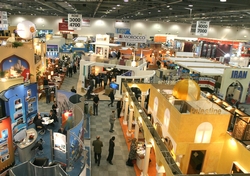
Coverage on the blog over the next few days will be intermittent (Monday), thorough (Tuesday and Wednesday) and back to intermittent (Thursday).

Yes, it can only be World Travel Market!

The Travolution team will be at the ExCel centre in East London from Monday 6 to Thursday 9 November, alongside our new TW Group brothers and sisters, Travel Weekly and Gazetteers.

You can find us at stand # 1700 in the South Hall.

On Tuesday and Wednesday this week we will, of course, be hosting our two-conference, Travolution@WTM.

Freelance journalist Tricia Holly Davis will be running the blog direct from the conference, so watch out for updates at the end of each session on both days.

[Conference agenda: Day One, Day Two. Delegate List. Book a place]

Kevin May, editor, Travolution

Friday, November 03, 2006

Weekend Caption Competititon # 3

Simon Vincent announced his departure from Opodo this week. But what is he really thinking, or what are those now leaderless employees saying on the sidelines...

Use the comments button below

Kevin May, editor, Travolution

Travel Weekly magazine and blog

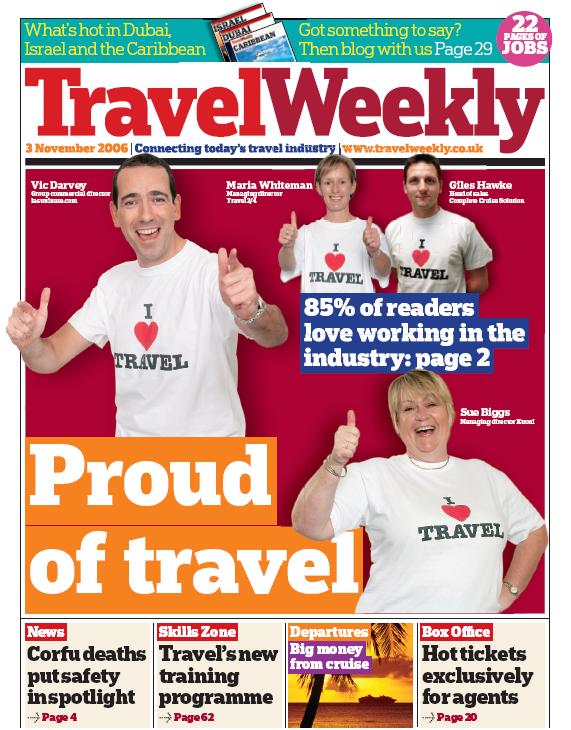
Some of you may have already seen that Travel Weekly has relaunched today.

It has a rather striking new look and is in a smaller format. Alongside a new magazine and website, Travolution has been helping out with getting Travel Weekly's first blog off the ground.

Take a look...

Some other housekeeping news: Travolution has today become part of a new division here at Reed Business Information, known as TW Group.

Joining Travolution in the group will be Travel Weekly and travel agent online information service Gazetteers Plus.

Kevin May, editor, Travolution

Thursday, November 02, 2006

Tim Berners-Lee gets twitchy about the web

So is Professor Sir Tim Berners-Lee suffering a little bit from post-traumatic invention disorder?

In an interview with the BBC, the British developer behind the World Wide Web says if the internet and the way it is used is to develop unchecked, then "bad things" could happen.

During the interview, he said: "If we don't have the ability to understand the web as it's now emerging, we will end up with things that are very bad. Certain undemocratic things could emerge and misinformation start spreading over the web.

"Studying these forces and the way they're affected by the underlying technology is one of the things that we think is really important."

TB-L is setting up a Web Science research project to study both the technological and social impact of the web on society.

Unfortunately he fails to outline what the "bad things" could be. Perhaps knowing that this beast that he helped create could eventually or indeed has already got out of control would actually have a tendency to play on anyone's mind.

Kevin May, editor, Travolution

Wednesday, November 01, 2006

No surprises there then

…that a roundtable discussion in London today to be chaired by Opodo’s Simon Vincent was hastily re-organised in the wake of his imminent exit from the company, announced yesterday.

Thankfully for the handful of journos present and the rest of the panel, including representatives from Accenture, Travelodge, PayPal, Shopping.com and QVC, Opodo’s UK country manager Neil Mott stepped into the breech, and performed admirably.

Perhaps he’s vying for the top job?

Kevin May, editor, Travolution

Expensive-cheapest-best-worst cities

PING and THUD! Hotels.com is clearly so proud of its Hotel Price Index report that it has sent both an electronic and a hefty pper copy to Travolution.

The survey outlines the changes in hotel trends, including the lists of the most expensive and cheapest cities around the world.

Most expensive [average price per night per room] in Q2 2006:

Moscow (£165)
New York (£140)
Boston (£135)
Chicago (£125)
Venice (£123)

Least expensive in Q2 2006:

Bangkok (£57)
Buenos Aires (£62)
Bilbao (£63)
Shanghai (£66)
Las Vegas (£67)

Consumers have also revealed their “second favourite cities”:

Brits recommend Edinburgh after London; Lyon is the second favourite for the French after Paris; Americans plump for New York and then Las Vegas; and Italians would pick Rome ahead of Milan.

Kevin May, editor, Travolution